Amanda Gorman: The Inspiration for a Modern Changemaker
by Alex Nellis
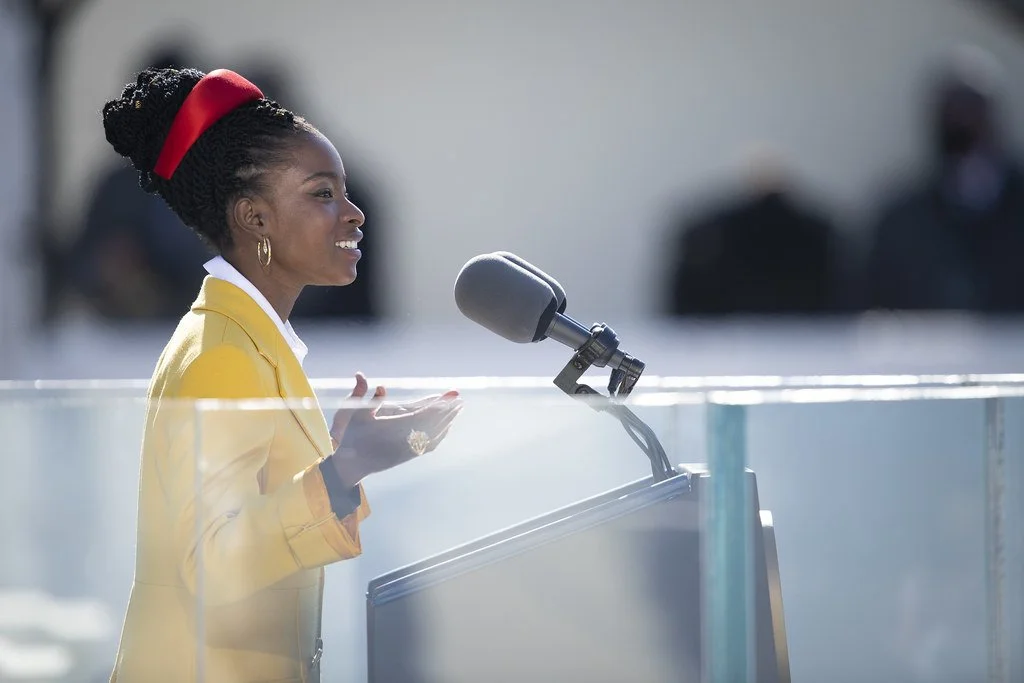
During Black History Month, we're often quick to turn to the past. However, Black History Month is also about recognizing the changemakers who are still making history today. One of the most pivotal changemakers in the literary arts in recent years is poet and activist, Amanda Gorman.
Gorman is most famous for reading her poem at former president Joe Biden's inauguration in 2021. At 23, she was the youngest poet to ever be asked to speak at a presidential inauguration. Her inaugural poem achieved critical acclaim for its unifying message.
Gorman's inspiration to write poetry started long before 2021. Her drive to write poetry began when she was young. At just 14, Gorman had already started writing her first poetry book. The One for Whom Food Is Not Enough was published in 2015.
During childhood, Gorman had a significant speech impediment. She has shared in interviews that she views her impediment as a strength, rather than a weakness. In an interview with Oprah, Gorman said that teaching herself how to speak made her a stronger writer.
"When you are learning through poetry how to speak English, it lends to a great understanding of sound, of pitch, of pronunciation," Gorman said. "I think of my speech impediment not as a weakness or a disability, but as one of my greatest strengths."
Gorman has been a writer for as long as she can remember. When she was 5, Gorman would often stay up late writing poems. Poetry was a vital creative outlet for her.
When Gorman was 14, she joined a girls' writing group, WriteGirl. This group taught Gorman how to hone her writing skills through workshops. She attended the monthly meetings, and It also helped her connect with famous poet Dinah Berland, who served as a mentor to Gorman.
Another major inspiration for Gorman was her mother. As a young girl, Gorman's mother spoke openly with her about racial injustice. In an interview with The Washington Post, Gorman shared how her mom encouraged her approach to poetry.
“When you are a Black child growing up in America, our parents have to have what’s called ‘the talk’ with us. Except it’s not about the birds and the bees and our changing bodies, it’s about the potential destruction of our bodies. My mom wanted to make sure I was prepared to grow up with Black skin in America, and that was my first awakening to the political climate I was stepping into.”
Gorman has been inspired by political activism since she was young. She has cited Malala Yousafzai's address of the United Nations Youth Assembly as a major inspiration to become politically involved. At 16, Gorman became a youth delegate for the United Nations. Gorman would also attend Harvard due to their strong commitment to social engagement.
When writing her poetry, Gorman found herself most inspired by issues of feminism, race, the African diaspora, and inequality. It was important to Gorman for her poetry to reflect her lived experience as a Black woman, which she feels is underrepresented within classic poetry.
She cites a number of Black feminist poets as her inspirations, including Audre Lorde, Maya Angelou, Phyllis Wheatley, and Tracy K. Smith. These poets taught Gorman the importance of approaching her poems from an intersectional lens.
Gorman believes art is a tool for activism. It has the power to provide a window into the perspectives' of others, and promote positive change. Her poems aim to encourage the opportunity for deeper engagement with lived experiences.
In a New York Times interview, Gorman shared her disheartenment by the fragmentation of our news culture. The rise of social media has led to echo chambers, condensing stories into taglines for quick engagement, and surface-level engagement with world events. Gorman aims to counter this with her poems. She believes poetry has the transformative power to showcase the unique perspectives, in a way that social media driven news cycles often cannot.
Throughout her life, Gorman has held the belief that poetry is one of the most vital tools to make voices heard. She feels that poetry provides a space to positively influence others to use their voices for good. In a Huffington Post article that Gorman penned, she shared these words of inspiration:
"I learned that poetry is voice, and the courage to use it. With this courage, we free ourselves and become capable of influencing others."
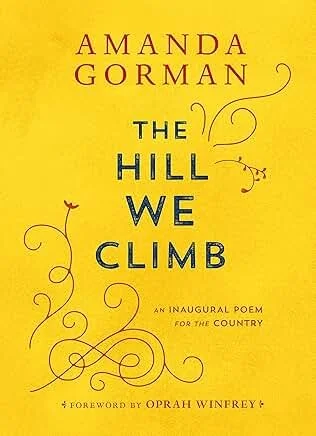
Gorman's work has received accolades, even prior to her inaugural poem. She became the first ever 2014 Los Angeles Youth Poet Laureate, and the 2017 National Poet Laureate. Following her 2015's The One for Whom Food Is Not Enough, Gorman published five more poetry collections: The Hill We Climb, Call Us What We Carry, and the children's poetry books Change Sings: A Children's Anthem, Something, Someday and Girls on the Rise.
Gorman inspired millions of Americans reciting The Hill We Climb at Joe Biden's inauguration. The Hill We Climb demonstrates Gorman's beliefs that poetry has the power to inspire, promote change, and bring us together.
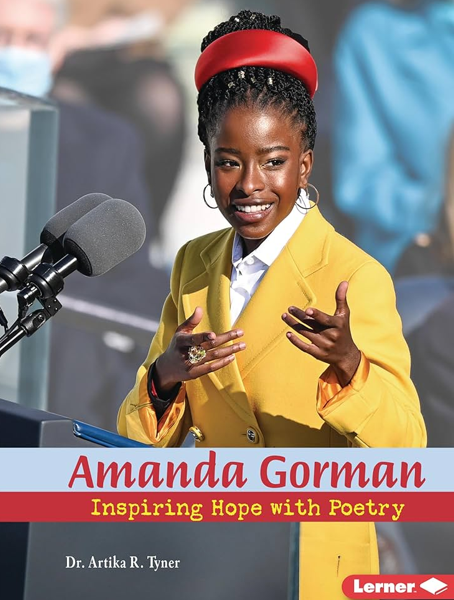
You can read more about the inspirations behind Gorman's poetry in Amanda Gorman: Inspiring Hope by Dr. Artika Tyner.
Check out the Planting People Growing Justice Leadership Institute website for more information about our programs and services. Follow us on social media for updates about the project at Planting People Growing Justice Leadership Institute.
As highlighted by Amanda's story, Black authors and poets are significantly underrepresented in literature. Planting People Growing Justice seeks to increase representation by publishing 100 Black authors by 2033. We're currently close to the halfway point at 41 authors! See how you can support our goal on our 100 Black Authors campaign page.