
A Look at the Modern Black Women Heroes in Law
by Alex Nellis
Planting People Growing Justice recently published another biography in our Difference Makers series, Charlotte Ray: Trailblazing Lawyer by Nancy Loewen. The book spotlights the first ever licensed Black female lawyer, Charlotte Ray. The book ends by highlighting some other trailblazing Black female lawyers throughout history. It’s important to recognize that there are still many Black female lawyers making history today. This post spotlights the backstories of a few of the most famous modern changemakers, and their contributions to the justice system.
Ketanji Brown Jackson grew up with a passion for debate. She was well-known for her expert debate skills, and won the oratory title at the National Catholic Forensic League championship in high school. She went on to pursue this passion and studied law at Harvard University. Throughout her college career, Ketanji was a strong advocate for racial equity. She protested the school’s refusal to hire full-time professors in the Afro-American Studies department, as well as a racist incident involving a student who hung a Confederate flag in his dormitory window.

Ketanji Brown Jackson
After completing her undergraduate work, she continued studying law at Harvard. She graduated with her J.D. in 1996. Following law school, Jackson held a number of prestigious positions. She served in a number of district courts as law clerks for judges. A few years later, she secured a clerk position for Supreme Court Justice Stephen Brayer.
She briefly returned to private legal practice before serving as an assistant federal public defender in Washington, D.C. from 2005-2007. Jackson was noted for being a strong advocate against overly lengthy prison sentences, and won numerous cases that shortened or erased unnecessarily punitive prison sentences.
In 2009, Jackson made history when President Barack Obama nominated her as vice chair of the U.S. Sentencing Commission. She was confirmed in 2010 and served through 2014. Continuing the work she did as a public offender, Jackson enacted the “drugs minus two” sentencing guideline. This reduced overly harsh sentences for minor drug infractions by two offense levels. This law ensured that those arrested on drug charges were not serving sentences equal to that of murderers and other high crimes.
In 2012, Jackson was nominated by Barack Obama as a district judge in Washington D.C. She was confirmed in 2013. Jackson’s rulings in this position consistently advocated for immigrants’ rights, protected access to health care, and fought for abortion rights.
In 2022, Jackson made history when she was nominated by President Joe Biden as a Supreme Court Justice. She has continued to be an advocate for the American people since her confirmation. In an increasingly polarized time, Jackson has bravely continued to stress the importance of unbiased rulings and legal analysis, rather than letting political leanings guide her decisions.
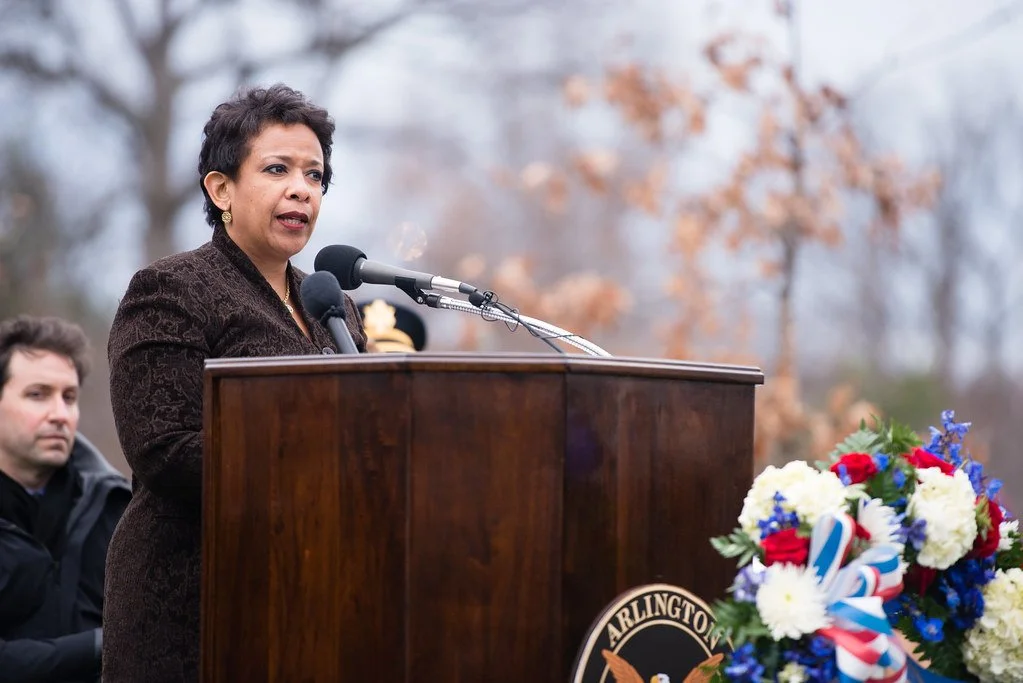
Loretta Lynch
Loretta Lynch's legal interests stemmed from hearing stories of her grandfather. Lynch's grandfather was a pastor, who helped people move to the north to escape the racism of the Jim Crow laws. Hearing those stories, as well as watching court proceedings with her father, gave her a passion for studying law and helping people.
Like Jackson, she studied at Harvard. She first got a degree in English, then circled back to her interests in law by pursuing her J.D. While in school, she served as a member of the Harvard Legal Aid Bureau.
She got her start working for a law firm in New York City. She tackled cases involving drug and violent crime, but later shifted to political corruption cases in her area. She was nominated by President Bill Clinton as U.S. Attorney for the Eastern District of New York in 1999. She would briefly leave the office in 2001, but was asked back by President Obama in 2009.
During her career with the U.S. government, Lynch was a fierce advocate against abuse of power. Many of her cases dealt with political corruption. She investigated employees of major companies like Citigroup, British bank HSBC, and FIFA for unlawful uses of power. She was asked by the NFL to investigate misconduct by the Washington team owners.
President Obama would later nominate Lynch as the U.S. Attorney General. She was the first African American woman to ever serve in this position. During her tenure, she worked with cases involving high-profile shootings, and gun violence. She served in the position from 2015-2017.
Throughout her career, Lynch has provided essential checks of power in high-stakes cases. The diverse types of investigations throughout her career have made her an expert in cases involving misuse of authority. She has worked to ensure our democracy remains truly for the people.
Our final current trailblazer is likely known by most readers. Kamala Harris is most famous as serving as the vice president of the United States from 2021-2025. However, her law career with the U.S. government prior to becoming vice president is less frequently discussed.

Kamala Harris
In 1989, Harris graduated with her J.D. from Howard University. During college, she served as president of the Black Law Students Association. After graduation, she was hired as a deputy district attorney in California. Harris was also a part of the Unemployment Insurance Appeals Board, and the Career Criminal Division.
In 2002, she won the election for District Attorney of San Francisco. Within six months of the position, Harris successfully cleared 1/3 of the backlog of homicide cases. She heightened the bail amount for gun offenses to reduce violence in the city. She also created a Hate Crimes Unit, meant to focus on reducing hate crimes for children who were a part of the LGBTQ+ community.
In 2010, Harris became the first woman elected to be Attorney General of California. In this role, she fought for data privacy with major technology companies like Google and Apple. She focused on protecting consumers from price gauging at for-profit colleges, and secured settlements for the excess money the corporations had claimed from students. She also fought against aggressive foreclosure practices for homeowners.
Right before becoming U.S. president, Harris was elected as a senator in 2017. She was endorsed by President Obama and Joe Biden. As senator, Harris was an advocate for immigration rights, fought against sexual assault, and was a vocal supporter of the DREAM Act. Following her four years as senator, Harris would make history by becoming the first woman of color to be vice president.
Ketanji Brown Jackson, Loretta Lynch and Kamala Harris are all trailblazers in their own way. All of them paved their own path, and continue to fight for justice in the United States every day. All three have already left incredible legacies, and are still keeping up the fight today. For another story about the first-ever Black woman to become a lawyer, be sure to pick up Planting People Growing Justice's new biography, Charlotte Ray: Trailblazing Lawyer by Nancy Loewen.
Check out the Planting People Growing Justice Leadership Institute website for more information about our programs and services. Follow us on social media for updates about the project at Planting People Growing Justice Leadership Institute.